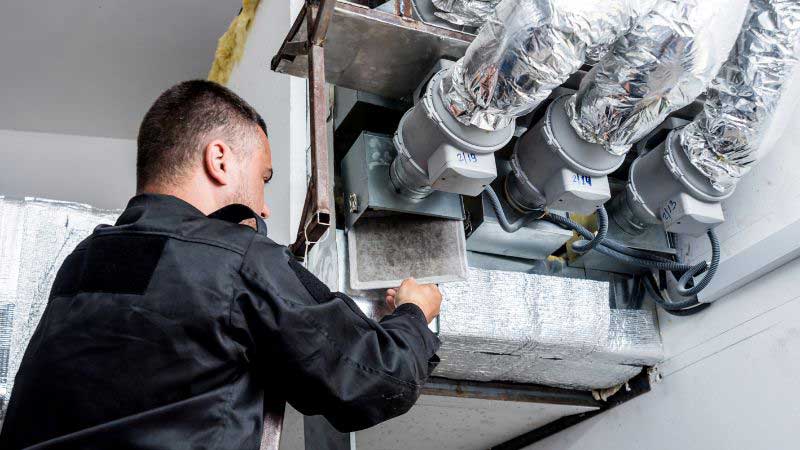
UFAD systems deliver conditioned air where it matters most—at occupant level—helping improve comfort, indoor air quality, and energy efficiency in modern homes.
When designing high-performance homes, indoor environmental quality and energy efficiency are top priorities for builders and homeowners alike. While overhead ducted systems have traditionally been the standard in residential construction, Underfloor Air Distribution (UFAD) is rapidly emerging as a superior alternative.
UFAD delivers conditioned air directly into the occupied zone of a room from floor-level diffusers, leveraging natural thermodynamics to optimize comfort, ventilation, and energy consumption.
What is Underfloor Air Distribution (UFAD)?
Underfloor Air Distribution (UFAD) is an HVAC delivery method that utilizes a raised floor plenum—or engineered floor cavities—to distribute conditioned air throughout a home.
Unlike traditional overhead systems that blast conditioned air from the ceiling and force it to mix with stale indoor air, UFAD systems introduce cool air at floor level at low velocity. As the air warms from natural heat sources (people, lighting, appliances), it gently rises toward ceiling-mounted return vents, carrying heat and indoor contaminants away from the living space.
Key Benefits of UFAD in Modern Residential Construction
- Superior Energy Efficiency and Lower Operating Costs
Traditional overhead heating and cooling require high fans speeds to push air down to human level, consuming significant power. UFAD systems operate at lower static pressures and higher supply air temperatures while keeping living zones equally comfortable. This reduces overall energy consumption, lowering utility bills for homeowners.
- Enhanced Indoor Air Quality (IAQ)
UFAD systems utilize displacement ventilation principles:
- Stale Air Displacement: Stale, contaminated air is continually pushed upward toward ceiling exhaust points rather than being recirculated within the living zone.
- Reduced Allergen Circulation: Because air enters at low velocity, dust, pet dander, and allergens are less likely to be kicked up and scattered around the room.
- Zonal Comfort and Individual Control
Occupant comfort is highly subjective. UFAD allows for floor diffusers with individual control dampers, enabling homeowners to adjust airflow in specific rooms or living zones effortlessly.
- Architectural Freedom and Aesthetic Appeal
Overhead ductwork often forces architects to lower ceilings, install bulky bulkheads, or compromise on open-plan layout designs. UFAD keeps ductwork beneath the floor plane, allowing for:
- Higher, uncluttered ceiling lines
- Cleaner architectural aesthetics without ceiling vents
- Flexible room layout changes over time
- Quieter Acoustic Performance
Because UFAD systems supply air at lower velocities and pressures, they significantly reduce the rushing air noise commonly associated with ceiling diffusers, resulting in a quieter living environment.
UFAD vs. Traditional Overhead HVAC: A Quick Comparison
Feature | Underfloor Air Distribution (UFAD) | Traditional Overhead HVAC |
Air Delivery | Floor-level diffusers (Displacement) | Ceiling diffusers (Mixed Air) |
Energy Consumption | Lower (Optimized pressure & airflow) | Higher (Needs high velocity to reach floor) |
Indoor Air Quality | High (Contaminants pushed upward) | Moderate (Air & dust continuously mixed) |
Aesthetics | Clean ceilings, hidden distribution | Visible ceiling vents & bulkheads |
Acoustics | Quiet operation | Moderate to loud air noise |
Engineering UFAD Systems for Residential Success
Implementing UFAD in residential builds requires precise mechanical drafting, thermal modeling, and system compliance to ensure maximum performance and comfort. Proper sealing of floor plenums, correct diffuser selection, and balanced airflow calculations are crucial to prevent thermal stratification issues or air leakage.
At ACE Mangalath Pty Ltd, our team delivers specialized HVAC design, performance solution reports, and 3D modeling tailored to high-end residential and commercial projects. We ensure your mechanical building services comply with Australian standards while offering optimal efficiency and design flexibility.
Frequently Asked Questions (FAQ)
Yes, UFAD systems can effectively provide both heating and cooling. When cooling, the system uses natural thermal buoyancy to gently lift warm air out of the space. For heating, perimeter floor diffusers are engineered to ensure warm air mixes evenly across the room.
UFAD is ideal for new modern builds, high-end custom homes, and multi-residential projects that incorporate raised floor systems or structured floor cavities during the initial design phase.
UFAD floor diffusers are designed with removable grilles and internal catch basins that collect dirt, dust, and debris. They can easily be vacuumed or wiped clean during standard house cleaning routines.
While the initial engineering and floor construction setup for UFAD can carry a higher upfront cost, it is often offset by reduced ceiling height requirements, lower operational energy bills, and long-term HVAC equipment longevity.
Optimize Your Residential HVAC Design with ACE Mangalath
Planning a modern residential build or looking for expert mechanical engineering solutions? Contact the engineering specialists at ACE Mangalath Pty Ltd today to explore custom HVAC design and compliance solutions for your project.