A well-designed gym HVAC system controls humidity, improves air quality, and keeps members comfortable during every workout. Smart ventilation helps prevent odors, mold, and moisture issues while boosting facility performance.
Gyms and fitness centers present some of the most demanding environments for commercial heating, ventilation, and air conditioning (HVAC) design. High occupancy levels, intense physical exertion, and heavy perspiration create massive internal heat loads and severe moisture challenges. Without a robust climate control strategy, fitness facilities quickly fall victim to excessive humidity, unpleasant odors, fogged mirrors, and destructive mold growth.
Designing an effective HVAC system for a gym requires specialized engineering that goes far beyond standard office cooling. Prioritizing moisture control and continuous fresh air delivery ensures a safe, comfortable, and hygienic workout environment for members and staff alike.
The Core Challenge: Managing High Humidity and Heat Loads
Unlike traditional commercial spaces, fitness facilities generate continuous waves of latent heat (moisture from breathing and sweating) and sensible heat (heat from equipment and bodies).
- Moisture Overload: Heavy breathing and active perspiration drastically spike indoor humidity levels. If this moisture is not actively extracted, condensation forms on walls, windows, and equipment, compromising structural integrity and encouraging microbial growth.
- Odor and Stale Air Control: High-intensity workout spaces trap body odors and chemical sanitizers. Without high air exchange rates, the indoor environment becomes stuffy and uninviting.
- Thermal Comfort Zones: Exercising bodies require lower ambient temperatures than resting individuals. However, over-cooling a damp room can create a chilling effect, leading to discomfort for cooling-down members.
Key Strategies for Gym and Fitness Center HVAC Design
1. Dedicated Outdoor Air Systems (DOAS) and High Ventilation Rates
Standard building codes require much higher fresh air exchange rates for gyms compared to standard offices—often measured in liters per second per person (L/s/person). Integrating a Dedicated Outdoor Air System ensures that incoming outside air is pre-conditioned and filtered before it enters the main workout floor, diluting carbon dioxide and airborne odors effectively.
2. Specialized Dehumidification Integration
Standard air conditioners cool air by passing it over cold coils, which removes some moisture as condensation. However, in high-humidity fitness environments, sensible cooling alone is insufficient. Modern gym HVAC designs frequently incorporate supplemental desiccant or high-capacity mechanical dehumidifiers to strip moisture out of the air independently of room temperature regulation.
3. Zoned Air Distribution and Strategic Airflow
Different areas of a fitness center demand completely different environmental treatments:
- Cardio Floors and Group Fitness Studios: Require high volumes of moving air and aggressive cooling to counteract intense physical activity.
- Free Weight and Resistance Zones: Benefit from steady, balanced airflow without harsh, localized drafts.
- Locker Rooms and Showers: Require dedicated exhaust systems running at negative pressure to prevent humid, odor-laden air from bleeding into the main workout spaces.
Best Practices for Long-Term System Reliability
- Install Corrosion-Resistant Equipment: High humidity and airborne cleaning agents can accelerate corrosion on standard coils and indoor units. Specifying anti-corrosive coatings extends equipment lifespan significantly.
- Automate via Smart Sensors: Utilize carbon dioxide ($CO_2$) and relative humidity sensors tied to a Building Management System (BMS) to ramp ventilation and dehumidification up or down dynamically based on real-time gym attendance.
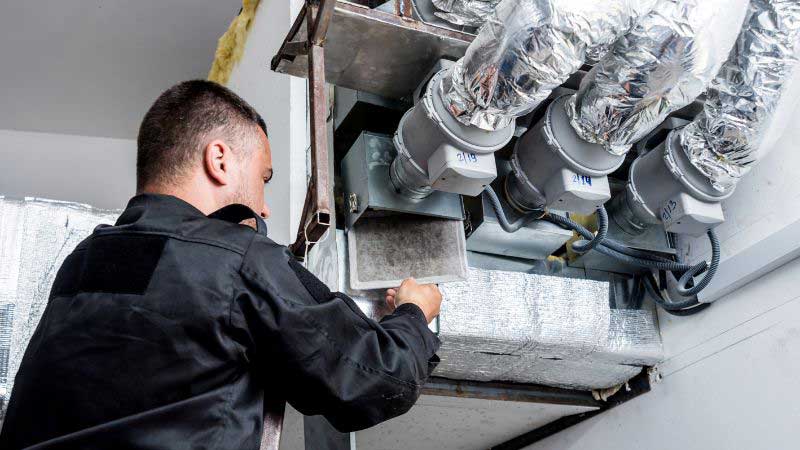
- Maintain Rigorous Filter Schedules: Dust, chalk, and hair particles clog filters at an accelerated rate in gyms. Frequent inspections and quarterly replacements keep static pressure low and energy efficiency high.
Frequently Asked Questions (FAQ)
A: Standard air conditioners are primarily designed to regulate temperature rather than moisture. Gyms generate extreme amounts of humidity through heavy breathing and sweating. Without dedicated dehumidification and high-volume fresh air ventilation, standard systems leave the air damp, stuffy, and prone to mold.
A: For optimal workout comfort and moisture control, the indoor temperature should generally be maintained between 18°C and 20°C, while relative humidity should be kept strictly between 40% and 60%.
A: Locker rooms and shower areas must be engineered with dedicated, continuous exhaust systems that maintain negative air pressure relative to the rest of the facility. This ensures that humid, odor-heavy air is pulled directly outside rather than drifting into the main training floor.
A: Due to high dust, moisture, and chemical exposure, critical maintenance tasks include cleaning and replacing air filters more frequently, inspecting condensate drain lines to prevent clogs, checking fan belts, and sanitizing coils to prevent bacterial growth.